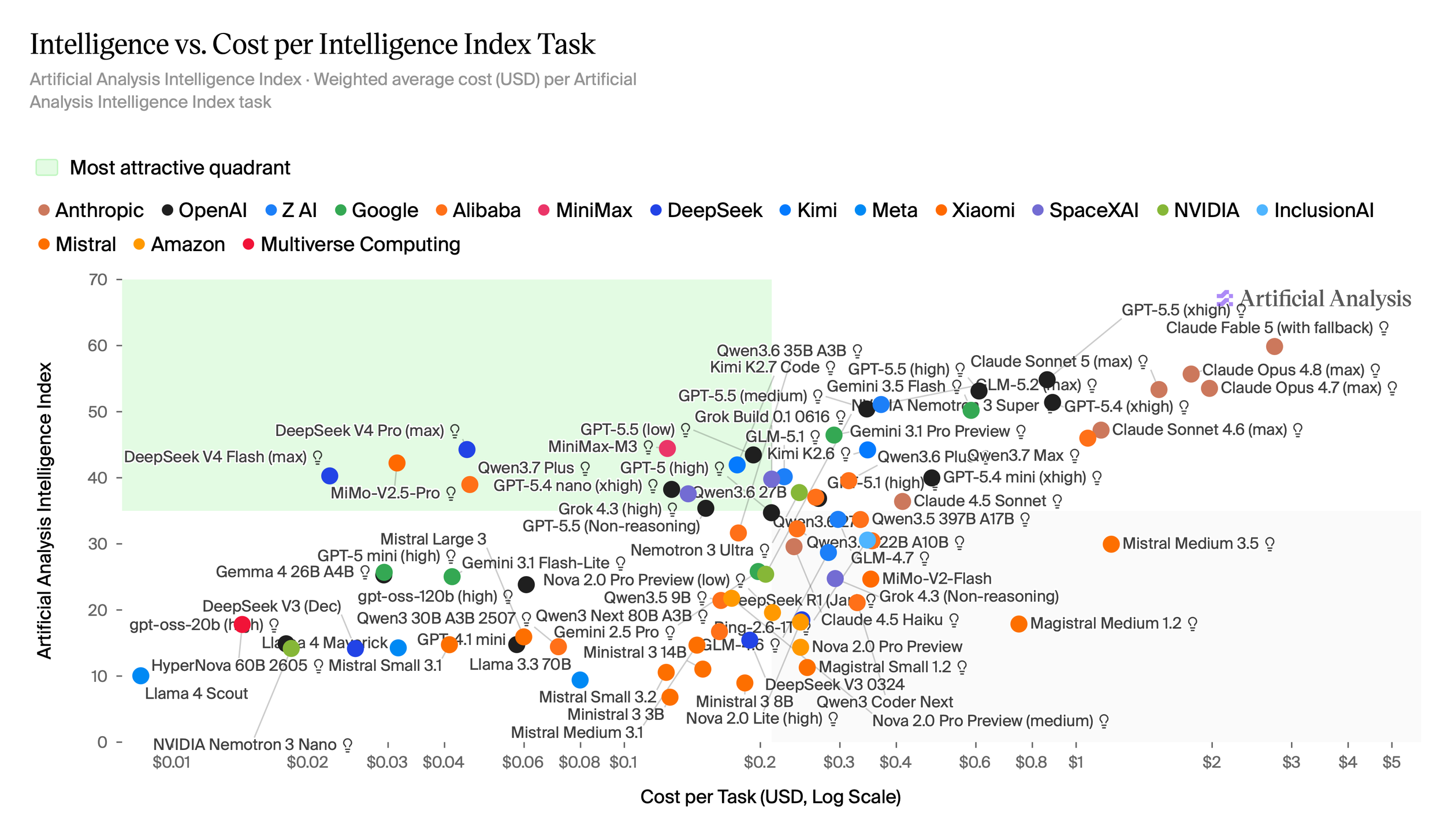
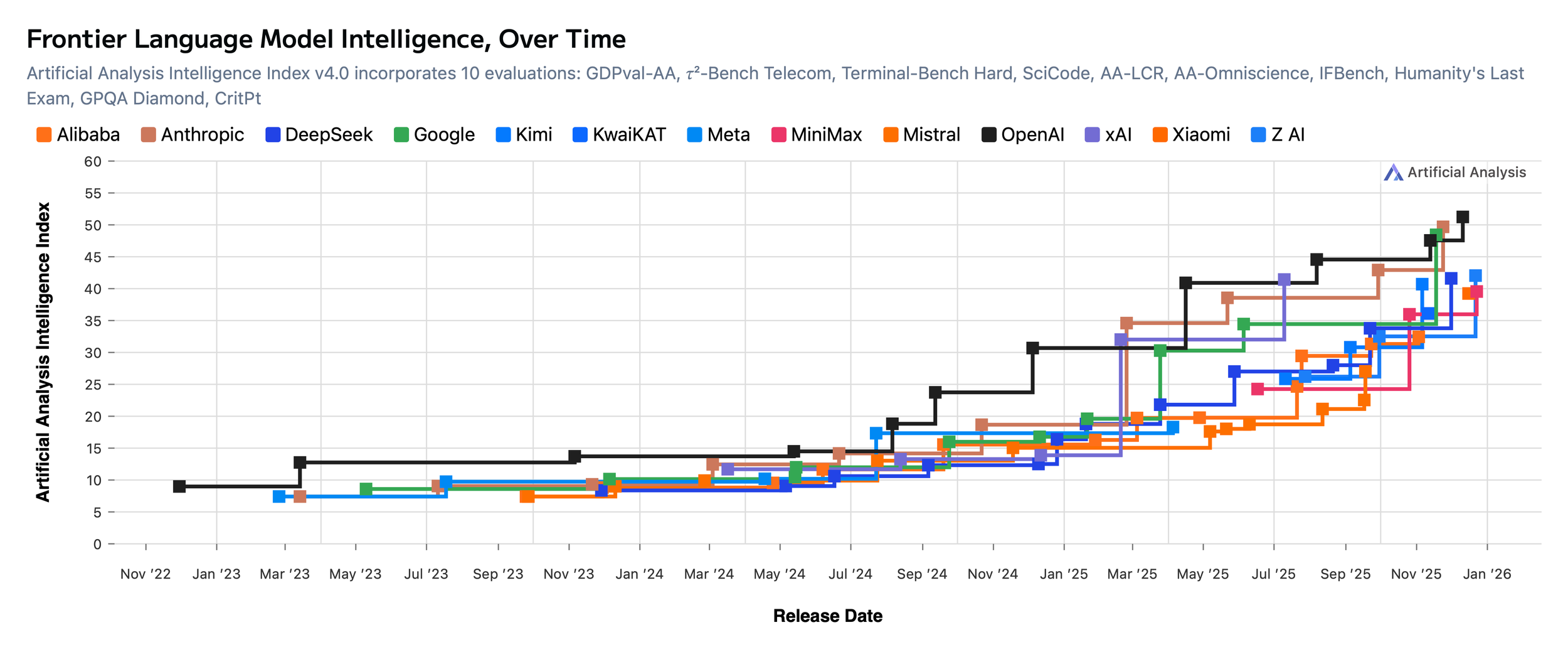
AI is in a supply crunch today, but what happens when we come out of it? How and where will supply, demand, price, capacity and capex get back into equilibrium? Today, model labs can name their price, but why won’t they end up as low-margin commodity infrastructure?
Many people would like to analyse which jobs, companies and industries are most exposed to AI, and assign scores, build charts, and map that against the progress of LLMs. I think this is mostly impossible: you don’t know how the jobs will change, you don’t know what else will change around this, and you can’t measure work like that anyway.
OpenAI has some big questions. It doesn’t have unique tech. It has a big user base, but with limited engagement and stickiness and no network effect. The incumbents have matched the tech and are leveraging their product and distribution. And a lot of the value and leverage will come from new experiences that haven’t been invented yet, and it can’t invent all of those itself. What’s the plan?
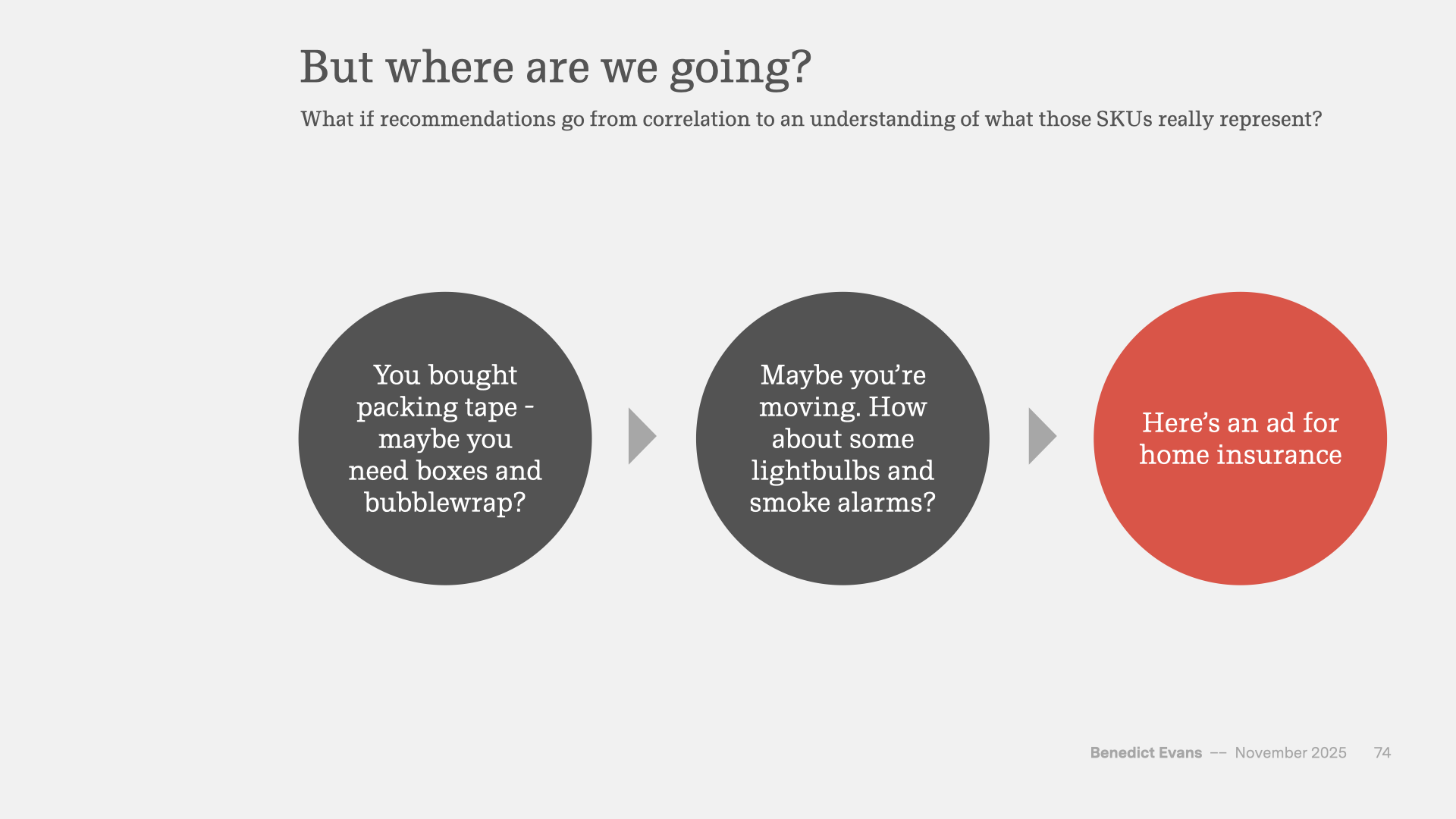
How far do LLMs give us a step change in how good a search and recommendation system can be? Do they let you build one without needing a vast user base of your own?
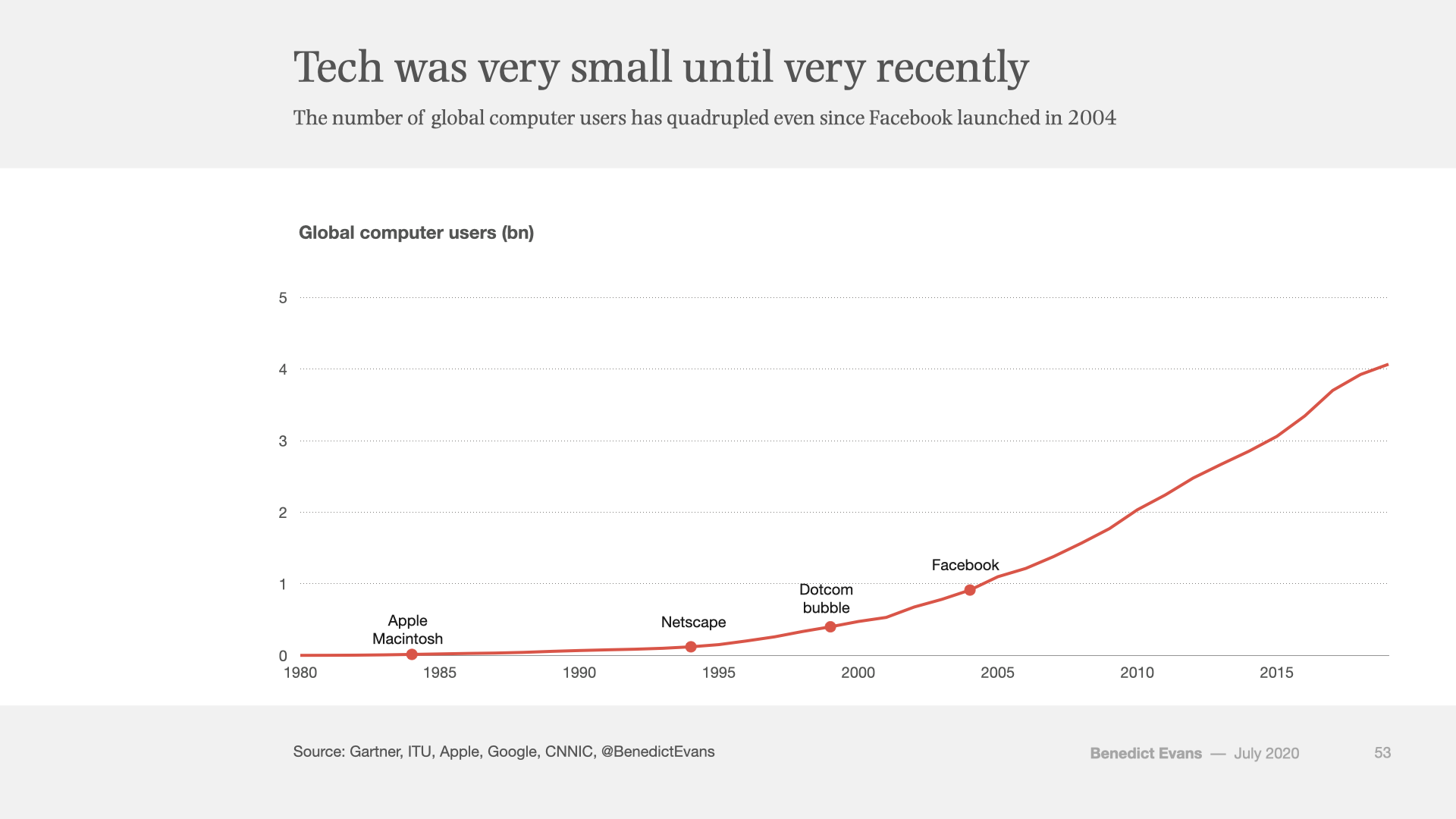
With every platform shift, we want to measure the growth but we’re confused about what to measure. That’s partly a problem of data and definitions, but it’s really a question about what this is going to be.
AI is in a supply crunch today, but what happens when we come out of it? How and where will supply, demand, price, capacity and capex get back into equilibrium? Today, model labs can name their price, but why won’t they end up as low-margin commodity infrastructure?
OpenAI has some big questions. It doesn’t have unique tech. It has a big user base, but with limited engagement and stickiness and no network effect. The incumbents have matched the tech and are leveraging their product and distribution. And a lot of the value and leverage will come from new experiences that haven’t been invented yet, and it can’t invent all of those itself. What’s the plan?
If you put all the world’s knowledge into an AI model and use it to make something new, who owns that and who gets paid? This is a completely new problem that we’ve been arguing about for 500 years.
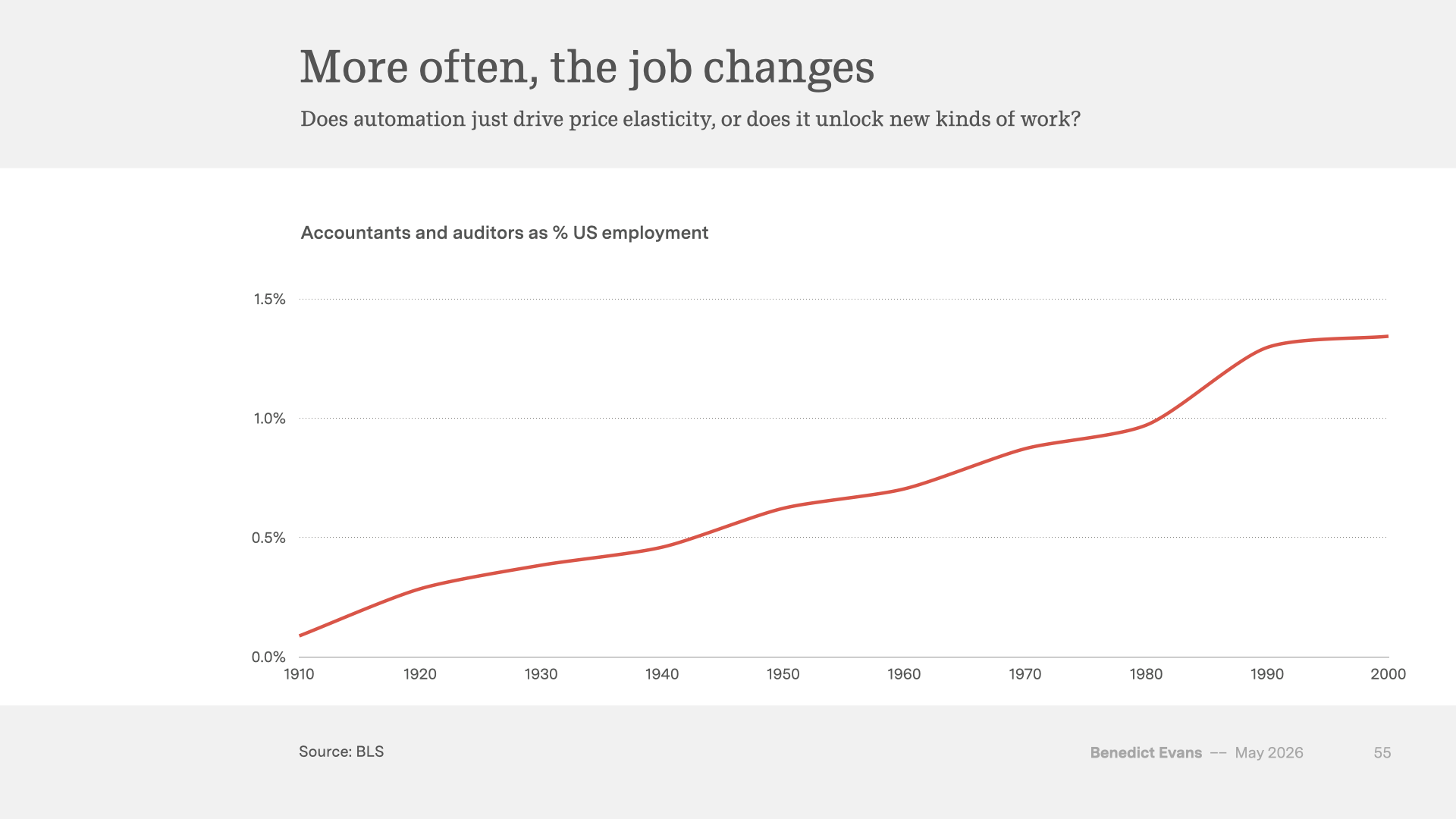
ChatGPT and generative AI will change how we work, but how different is this to all the other waves of automation of the last 200 years? What does it mean for employment? Disruption? Coal consumption?
What has Apple built, what is it for, what does it mean for Meta, and why does it cost $3,500? Check back in 2025.
Amazon sold close to $40bn of advertising last year - bigger than Prime, bigger than the entire global newspaper industry and probably more profitable than AWS. But is this really advertising, rent, or something else? And what does that mean for Google?
‘Big tech’ buys hundreds of startups, but what are they, what does that mean for competition, and how does this fit into the broader market? How many more Instagrams are there, and how many PA Semis?
‘Digital transformation’ sounds like a parody of meaningless tech marketing, but actually captures some pretty interesting and important shifts in big company tech. It’s not as exciting as crypto or AR, and it takes a decade or two, but it’s just as big as smartphones.
Privacy is coming to the internet and cookies are going away. This is long overdue - but we don’t know what happens next, we don’t have much consensus on what online privacy actually means, and most of what’s on the table conflicts fundamentally with competition.
People talk a lot about AWS as Amazon’s cash cow, but the ad business buried in the back of the accounts might be just as profitable.
What happens when rent, returns and advertising blur into one? What would it mean to do ecommerce that doesn’t scale?
We regulate lots of industries, from food to cars to airlines, and now we’re going to regulate tech. But what does that mean? Regulating tech won’t be any more easy or simple than any other kind of policy - policy is complicated and full of trade-offs.
Microsoft and IBM used to dominate tech - today they’re still big companies, but no-one is scared of them anymore. That wasn’t because of anti-trust. Rather, the products that used to give them dominance stopped mattering. We still use Windows, and mainframes, but they’re not the centre of tech anymore.
There's a wave of companies trying to find new ways to make software for work, building bundles of workflows and networks that capture the spreadsheets, emails and phone calls of some industry or profession and turn them into structure, automation and time.
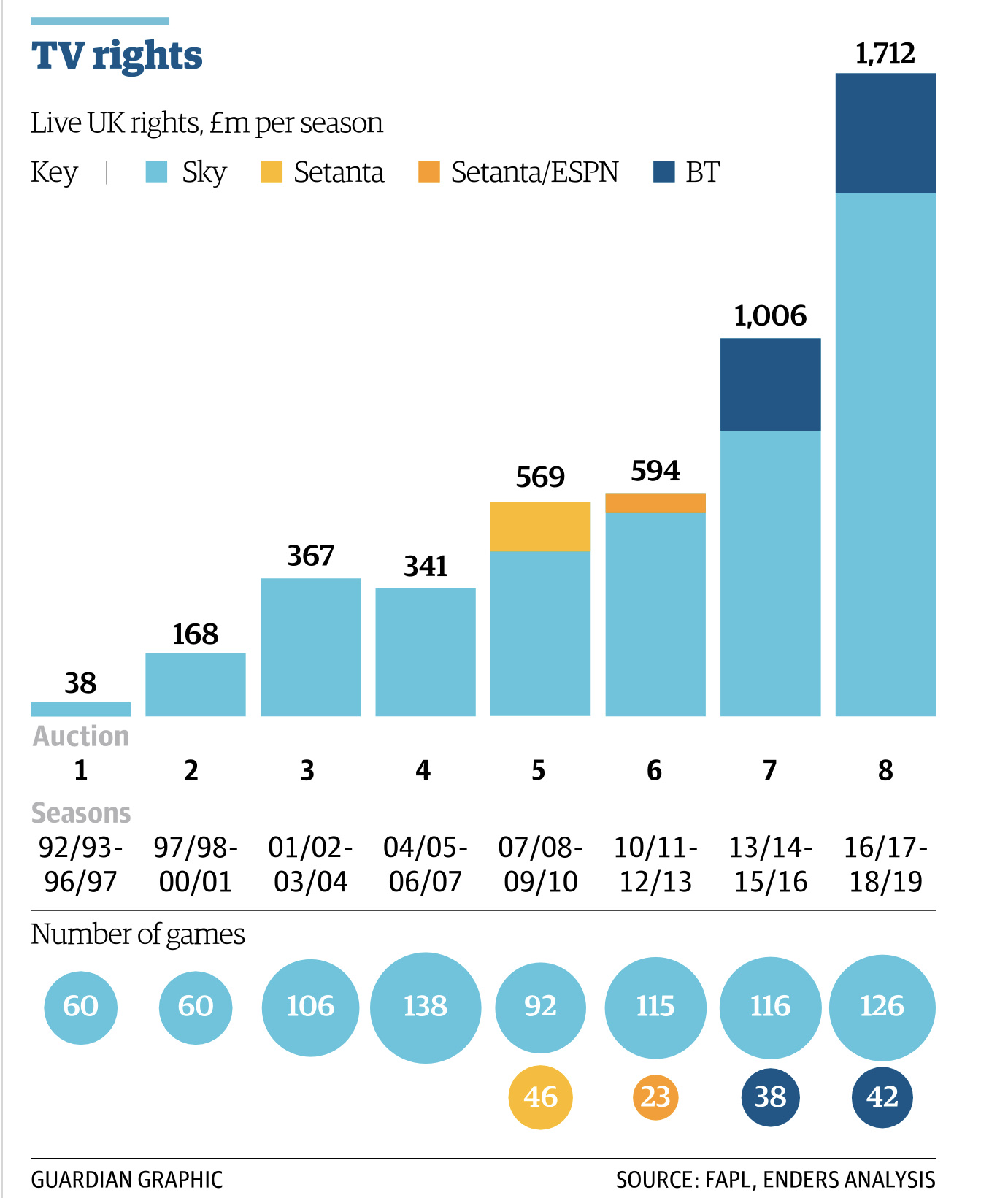
Like Sky before it, Netflix is a television company using tech as a crowbar for market entry. The tech has to be good, but it’s still fundamentally a commodity, and all of the questions that matter are TV questions. The same applies to Tesla, and indeed to many other companies using software to enter other industries, especially D2C - what are the questions that matter?
Car people often look at Tesla the way Nokia looked at the iPhone. “Nice ideas, but we can easily do all of that, and they don’t understand our industry.” Nokia was wrong - but will the car industry look the same? Maybe not.
Everyone has heard of machine learning now, and every big company is working on projects around ‘AI’. We know this is a Next Big Thing. But we don’t yet have a settled sense of quite what machine learning means - what it will mean for tech companies or for companies in the broader economy, how to think structurally about what new things it could enable, and what important problems it might actually be able to solve.
People in tech and media have been saying that ‘content is king’ for a long time - content and access to content was a strategic lever for technology. This isn’t really true anymore. Music and books don’t matter much to tech, and TV probably won’t matter much either.
We talk a lot about levels of autonomy, and ask when the first ‘fully autonomous’ cars will appear. That might be the wrong way to look at it - there will be lots of different kinds of ‘autonomy’, and the ‘where’ and ‘what’ may matter as much as the ‘when’.